
Store Settings
Your online store is your own branded D2C website on a Mystore web address. Setting it up takes a few minutes: pick a name and web address, fill in six short groups of settings, and publish when you are ready.
1. Open the storefront builder
There are two ways in:
- Click Create store on the Create your D2C website card on your dashboard.
- Or go to Online Store under Sales Channels in the left panel.
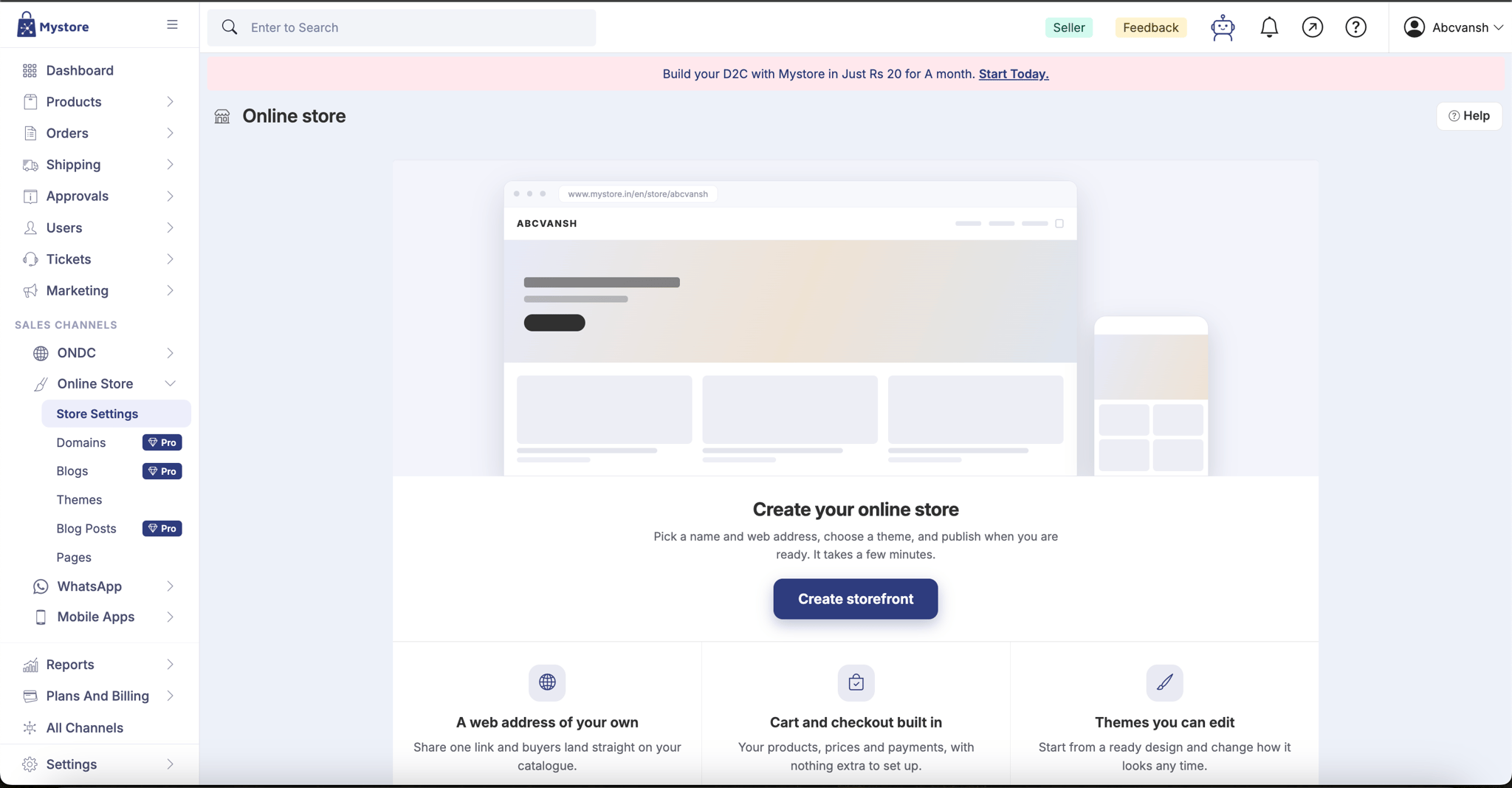
You land on a preview of what your store will look like, with a short summary of what you get - a web address of your own, a cart and checkout that is built in, and themes you can edit. Click Create storefront to start.
2. Fill in your store settings
The settings are grouped into six tabs down the left of the page. You can move between them in any order. Fields marked with a red asterisk are required. When everything is filled in, click Create storefront at the top right - or Cancel to leave without saving.
You can reach these settings again at any time from Online Store → Store Settings.
Tab | What it covers |
|---|---|
General | Store name, web address and branding |
Contact & Store location | How shoppers reach you and where you sell from |
Storefront | Language, currency and what shoppers can see |
SEO | Analytics, tracking and social profiles |
Integrations | Connected channels and third party keys |
Other | Everything else you can set on this store |
3. General
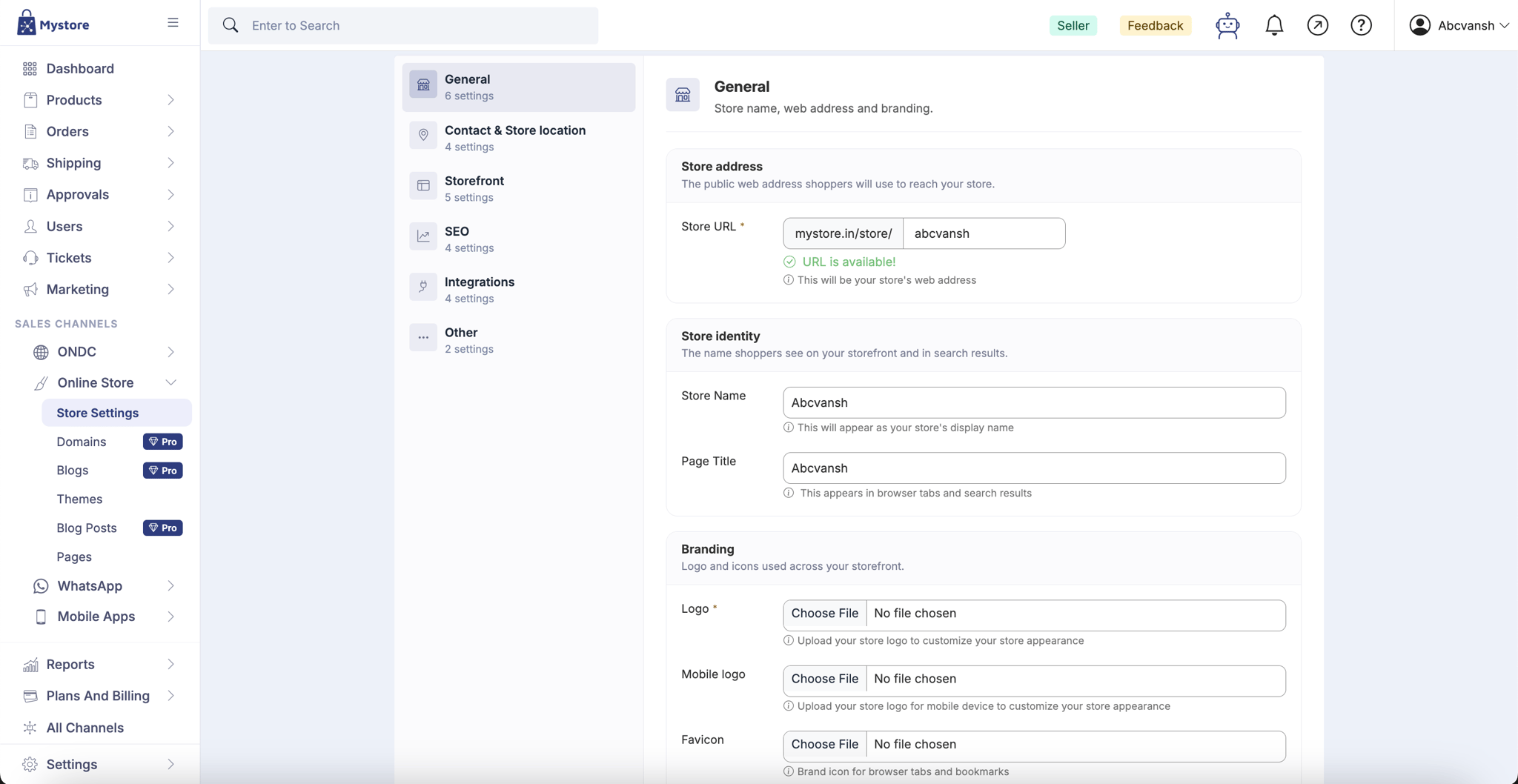
Your store name, web address and branding.
Store address
- Store URL (required) - the public web address shoppers use to reach your store. Type the part that goes after mystore.in/store/ and the system tells you straight away whether it is available. Pick something short and close to your brand name.
Store identity
- Store Name - your store's display name, shown on the storefront.
- Page Title - what appears in browser tabs and search results.
Branding
- Logo (required) - your store logo, used across the storefront.
- Mobile logo - a version sized for mobile devices.
- Favicon - the small brand icon shown in browser tabs and bookmarks.
4. Contact & Store location
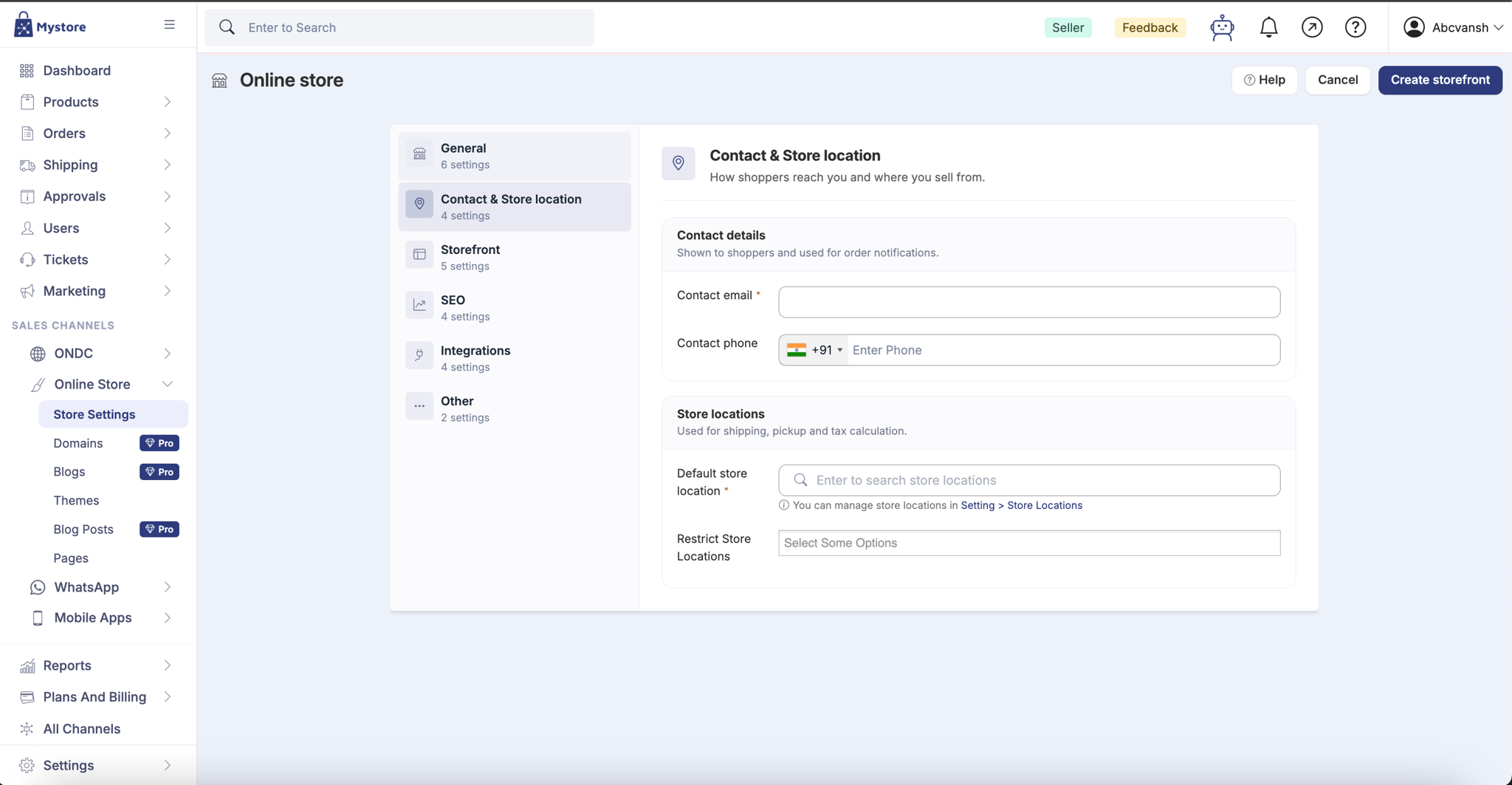
How shoppers reach you, and where you sell from.
Contact details
These are shown to shoppers and used for order notifications.
- Contact email (required)
- Contact phone
Store locations
Used for shipping, pickup and tax calculation.
- Default store location (required) - search and select the location orders are fulfilled from. Locations are managed under Settings → Store Locations, so add one there first if the list is empty.
- Restrict Store Locations - optionally limit this storefront to specific locations. Leave it blank to use all of them.
5. Storefront
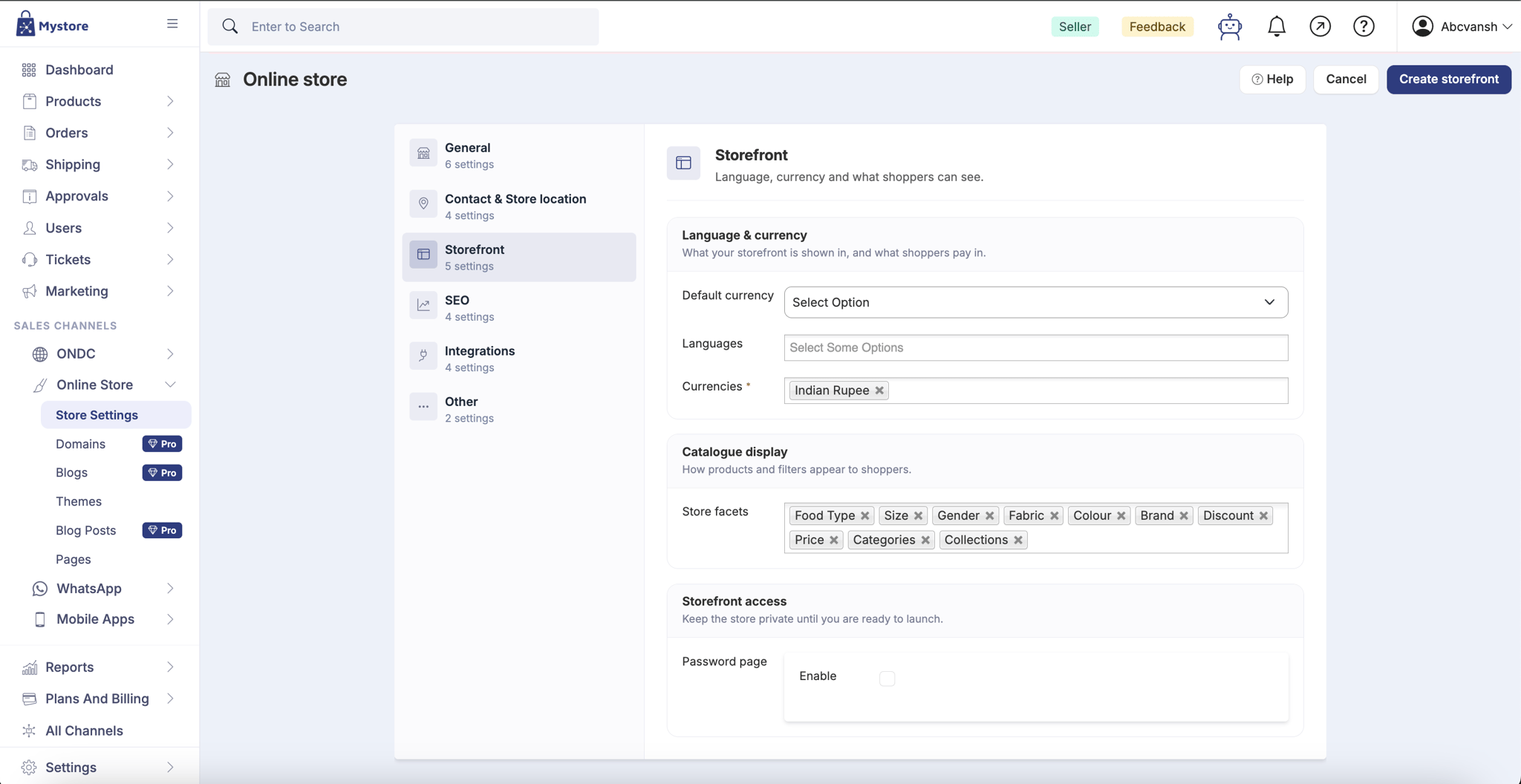
Language, currency and what shoppers can see.
Language & currency
- Default currency - what your storefront is shown in.
- Languages - the languages your storefront is available in.
- Currencies (required) - what shoppers can pay in. Add or remove currencies here.
Catalogue display
- Store facets - the filters shoppers can use to narrow your catalogue, such as price, size, colour, brand, categories and collections. Remove any that are not relevant to what you sell.
Storefront access
- Password page - tick Enable to keep your store private until you are ready to launch. Visitors then see a password page instead of your catalogue, and only people with the password can get in. Turn it off when you want to open the store to buyers.
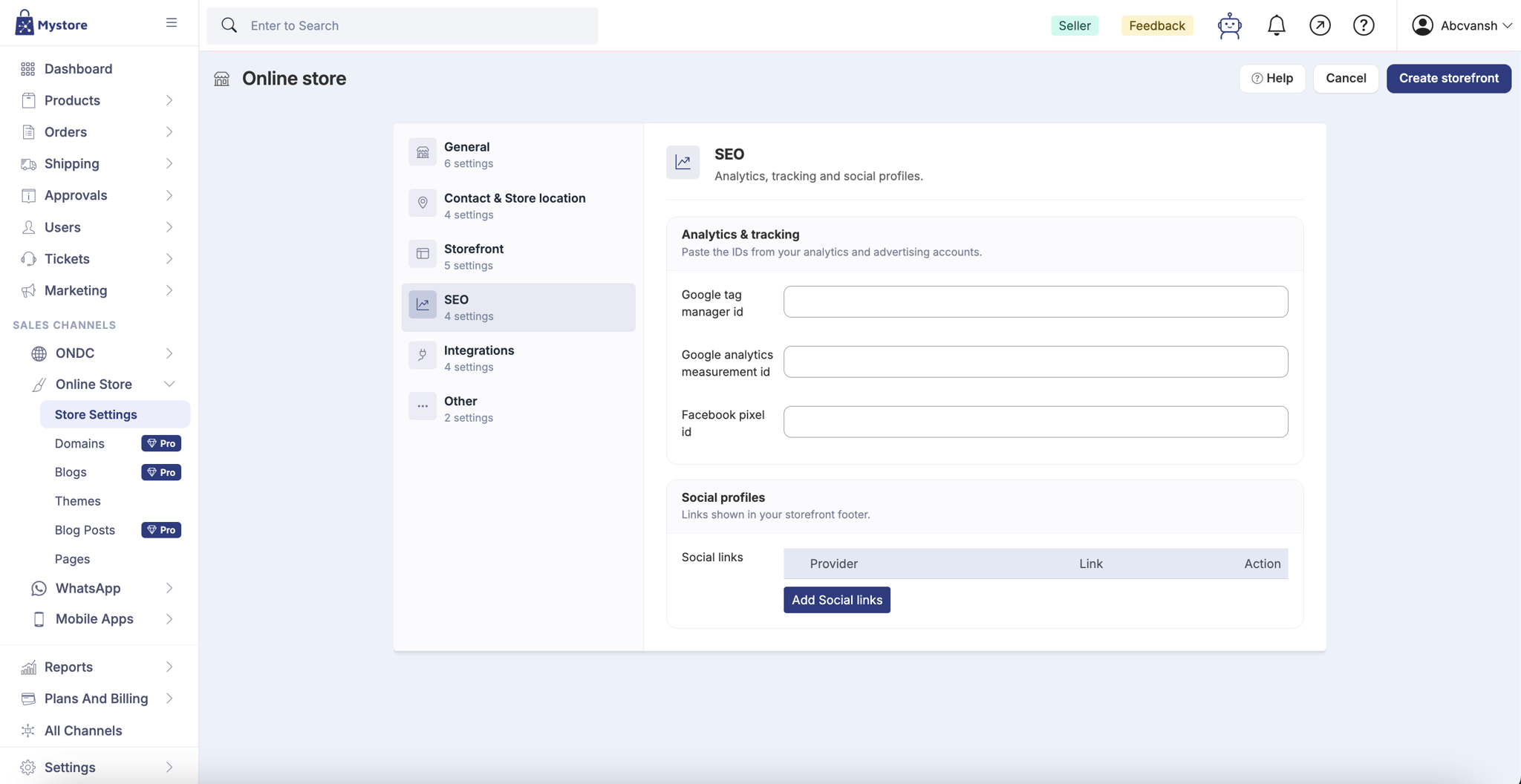
6. SEO
Analytics, tracking and social profiles. Everything here is optional - you can add it later once your store is live.
Analytics & tracking
Paste the IDs from your analytics and advertising accounts:
- Google tag manager id
- Google analytics measurement id
- Facebook pixel id
Social profiles
- Social links - click Add Social links to add a provider and its link. These appear in your storefront footer.
7. Integrations
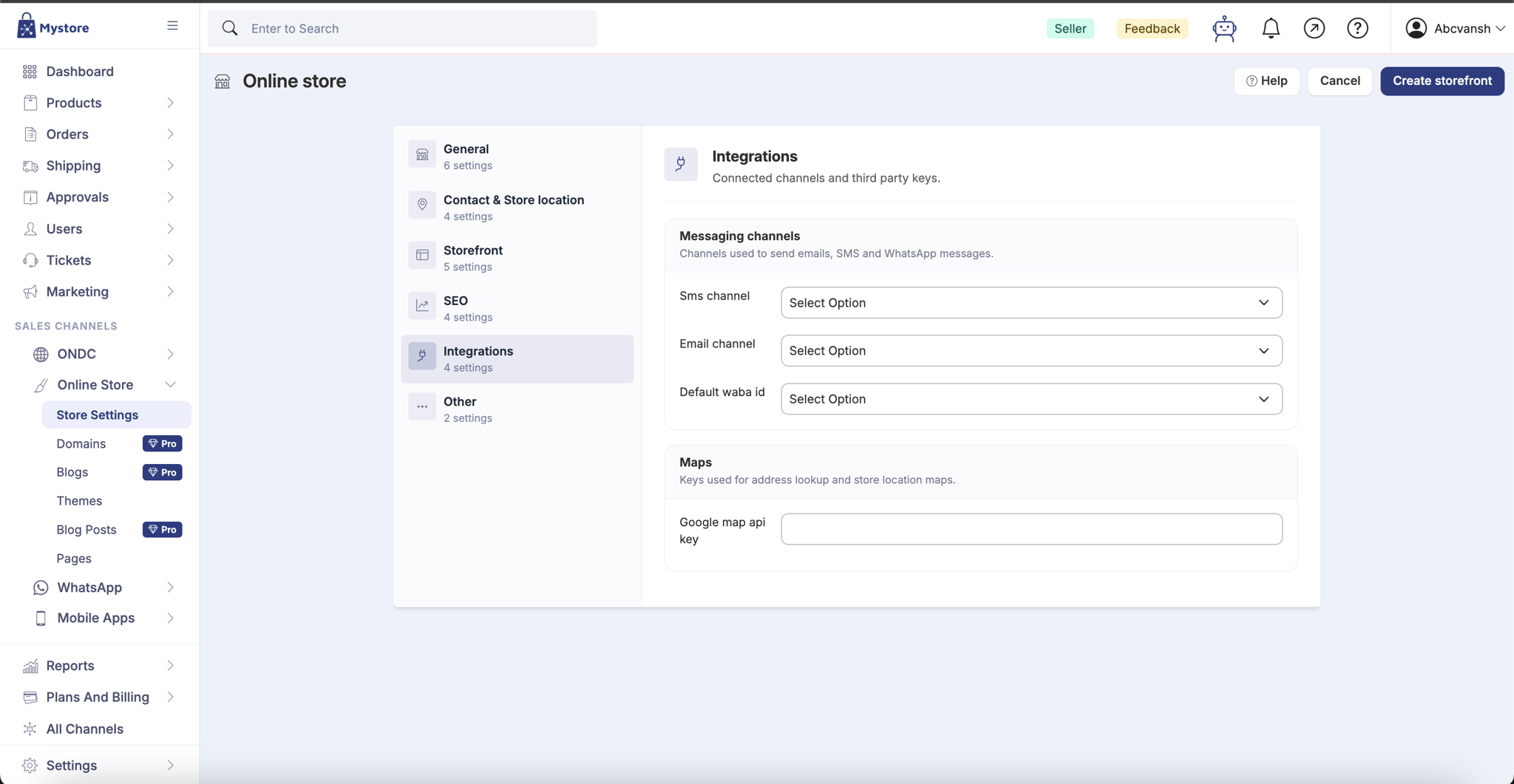
Connected channels and third party keys.
Messaging channels
Used to send emails, SMS and WhatsApp messages to your customers.
- Sms channel
- Email channel
- Default waba id - your WhatsApp Business Account, if you sell over WhatsApp.
Maps
- Google map api key - used for address lookup and store location maps at checkout.
8. Other
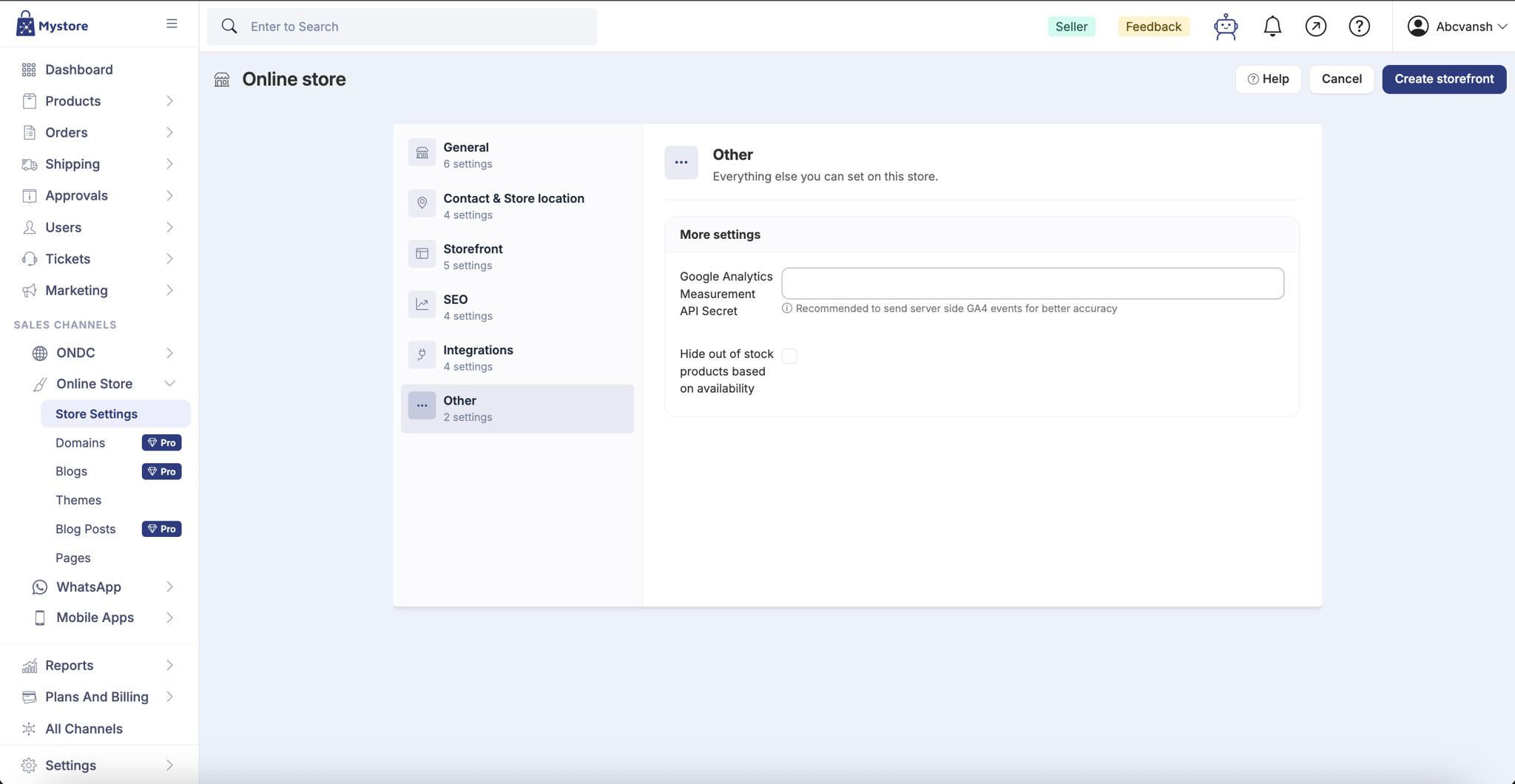
Everything else you can set on this store.
- Google Analytics Measurement API Secret - recommended if you want server-side GA4 events, which track more accurately than browser-side events alone.
- Hide out of stock products based on availability - tick this to remove products from your storefront automatically when they run out of stock.
9. Create your storefront
When your required fields are filled in, click Create storefront at the top right. Your store is created and you can start adding products.
Nothing here is permanent - come back to Online Store → Store Settings any time to change a setting. You will also find Themes and Pages in the same menu, plus Domains, Blogs and Blog Posts, which are marked Pro and need a paid subscription.
Handy tips
- Choose your store URL carefully. It is your public web address, so pick something short and close to your brand name.
- Add your store location before you start if you can - the Default store location field is required and pulls from Settings → Store Locations.
- Use the password page while you build. It keeps the store private until your catalogue is ready, and you can share the password with your team or testers.
- Analytics can wait. The SEO and Other tabs are optional - get the store live first and add tracking later.
- Prune your store facets. Leaving filters like Food Type or Fabric on a store that does not need them clutters the shopper's view.